
Being older now, I often reflect upon the things which have shaped me over time to pass them on to my kids. Among others, one of the most important and prized possessions that I am extremely proud of is our family farm. We’ve farmed for over 100+ years. My forefathers selected the section for its breathtaking views and built their houses from scratch. Since then, it has been a thrill to witness to generations of conversations, celebrations and all kinds of emotions.
The house still looks as young as a teenager! But to keep it that way, we renovate it from time to time! We also have some longstanding traditions like cutting and using our own firewood, picking juicy mushrooms, foraging for wild berries and generally having fun in the outdoors. This has in fact kept the links alive among generations.
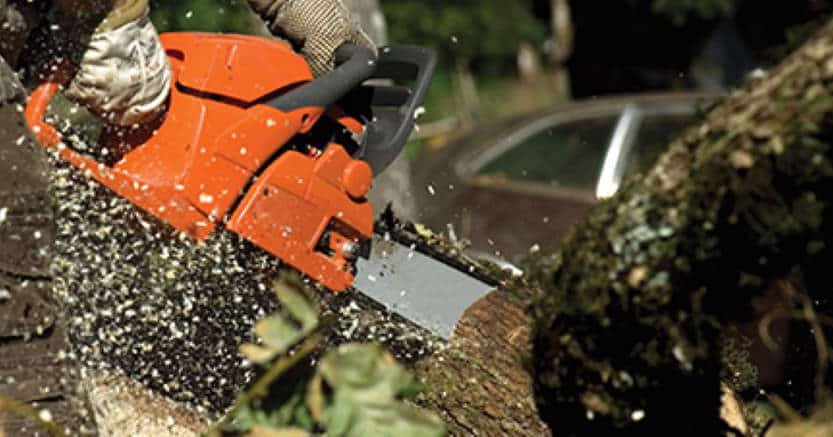
I still remember the excitement I felt when my father let me operate a chainsaw for the first time. It wasn’t one of the advanced chainsaws you get these days. The sound of the saw cutting through the wood filled the young me with excitement and joy. The feeling is still the same and I could sense the same excitement when I recently taught my own child the basics of a chainsaw. The father in me was a little anxious at first but also proud when he handled it successfully.
Operating chainsaws can be a little tricky, so I thought I would share my experiences with you all to make it a safe and pleasant experience the next time you want to do some work on your own or teach your kid.
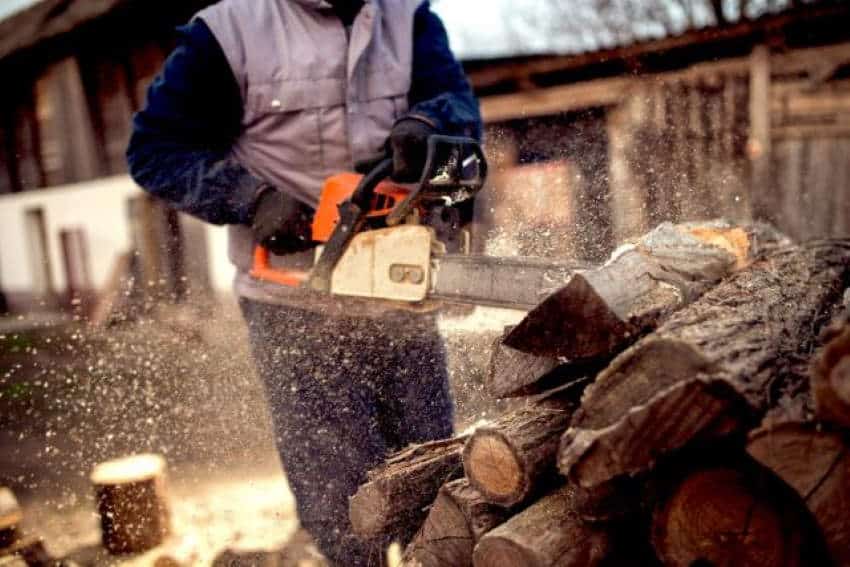
How to Use a Chainsaw While Staying Safe
My father always emphasized on the two most important things to make the right cut without getting hurt – focus and composure. Don’t rush it; just keep practicing to get better on a day-to-day basis. The key to using the chainsaw is to follow the safety precautions and swear by them whenever handling the tool. Incidentally, these are good life lessons too!
Personal Protection
Like in every other activity that requires some sort of specialized skills, proper gear is essential while operating a chainsaw. I would like to stick to the Personal Protective Equipment (PPEs) here. You can pick these up from any retail store or can also order them online.
Helmet System
A helmet system covers three major body parts- your head, face, and ears. The sound of this power tool can be deafening. Also, it is important to keep your ears and face protected from the small particles of wood that fly around as soon as you start operating on the log. A good helmet system keeps all this at bay.
No products found.
Protective Goggles
Invest in a nice pair of protective, dust-resistant goggles. These will keep the experience enjoyable. After all, you need to see right to make it work perfectly.
No products found.
Chaps
Loose clothing is a strict no-no as it can get stuck in the sharp teeth of the saw making everything messy. Invest in a good pair of chaps with at least 8-9 layers of cut-resistant material. You can find it in any hardware store.
No products found.
Gloves
Your grip of the chainsaw needs to be perfect to avoid any damage to your fingers or any kind of mishandling. Gloves which are not slippery and cut-resistant are the best.
No products found.
Boots
You usually keep a chainsaw pretty close to your feet. Hence using a good pair of cut-resistant boots is important to get a strong foothold on the ground and also avoid injuries.
No products found.
How to Use a Chainsaw: Starting the Machine
Once you are ready with the gear, the next step is to start it. I, personally, have always found the instruction manuals extremely handy and helpful. It is a 5-step process for beginners (you can still follow it if you’re a pro chainsaw user).

- Firstly place the chainsaw on a flat surface, hold the handlebar with one hand and starter rope with the other. Place your right toe in the rear end to make it stable.
- The next step is to pull the starter rope gently and then with pressure till the engine fires & dies off soon after.
- The third step is to open the choke by moving the master control lever to a half throttle position followed by pulling the starter rope again to fire off the engine.
- Touch the throttle trigger briefly to move the master control lever to the previous position.
- The fifth and final step is to lift the chainsaw up gently, release the chain brake and turn on the bar.
Make sure that the chain is properly lubricated & tightened firmly before putting it to use.
Focus – Never Lose It!
If you miss any of these steps, things can very quickly get out of control. I still recall how my uncle almost had his leg cut in two by the chainsaw.
I was out in woods with my dad, my younger brother, uncle and a few cousins to collect wood for a small bonfire party. My uncle had kept the saw below waist level and between his legs. He was just about to start it when he got distracted by one of my cousins. While releasing the chain brake, the saw slipped from his hands and fell on the ground. He narrowly escaped having his leg cut and that memory has stuck with me since then.
Hence, remember that irrespective of whether you are a beginner and or an experienced lumberjack, accidents can happen and the key to avoiding them is to not lose focus.
How to Use a Chainsaw: Mastering the 3-key Operations
Once you are confident in your ability to handle a chainsaw, you can start practicing basic operations including limbing, bucking, and felling.
Limbing
As the name suggests, limbing is all about removing the tree limbs. This is done after felling the tree to the ground. Extreme weather conditions have sometimes resulted in trees falling by themselves in our backyard and having a chainsaw often saved us from investing extra bucks on this task.
Bucking
The different logs of the tree can be used in numerous ways when cut right and bucking is all about cutting those trunks into usable pieces.
Felling
Felling is the art of cutting a tree down completely and requires a lot of practice, perseverance, and precision.
Apart from these, there’s trimming that is used to remove extra branches of overgrown trees which are hampering sunlight, blocking a pathway or simply blocking a nice view.
Beware of Chainsaw Kickback!
To every action, there’s an equal and opposite reaction. The kickbacks are just that when working with a chainsaw! My dad always told me to stay alert in order to avoid kickbacks and keep your eyes on the nose of the chainsaw, thus making sure it is positioned correctly.
These days, low kickback chainsaws are also available in the market and you can go get one of them to help get yourself familiarized with operating a chainsaw.
These are some of the basic guidelines I could think of to kick-start the chainsaw experience for anybody looking to buy and start using one. But, keep in mind that reading and implementing are two different things.
I would suggest you start with an experienced person being around when taking the first shot at this high-speed power tool. Once you get a hang of it, it just gets better with time. It is indeed an enriching experience with that much power in your hands!
Verdict on How to Use a Chainsaw
No matter which chainsaw you own, be it gas or electric-powered, from Stihl or DeWalt, it’s essential to learn how to use this machine properly as it can be really dangerous, especially for beginners.
References:
- https://www.osha.gov/SLTC/personalprotectiveequipment/
- https://www.stihl.com/p/media/download/uk-en/STIHL_Chain_Saw_Safety_Manual.pdf
- Our own experience
Last update on 2026-09-24 / Affiliate links / Images from Amazon Product Advertising API
